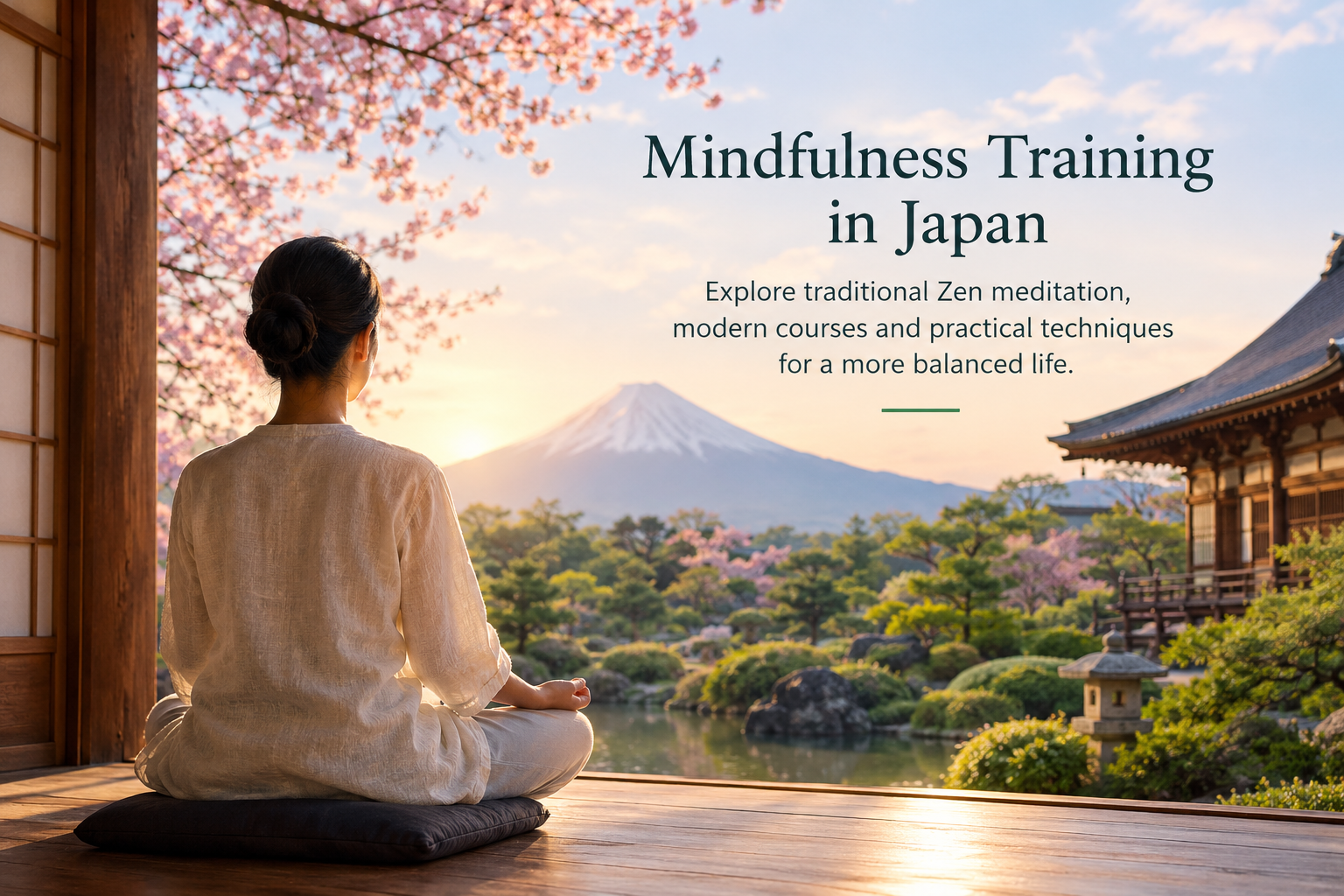
Mindfulness Training in Japan: A Complete Guide
Mindfulness Training in Japan: A Complete Guide to Finding Balance, Awareness and Inner Peace
Modern life often moves faster than people can comfortably manage. Professional responsibilities, personal commitments, digital distractions and constant expectations can make it difficult to slow down and pay attention to the present moment. Even when the day finally becomes quiet, the mind may continue thinking about unfinished tasks, future plans and past experiences. This is one reason why mindfulness has become an important subject for people looking to develop a healthier relationship with their thoughts, emotions and everyday experiences.
Japan offers a particularly interesting environment for exploring mindfulness. The country has a long association with Zen Buddhism, meditation, traditional arts and practices that encourage attention to the present moment. From quiet temple surroundings to carefully performed tea ceremonies, many aspects of Japanese culture provide opportunities to understand the value of patience, simplicity and awareness.
Today, Mindfulness Training in Japan brings together traditional meditation influences and contemporary approaches to mental wellness. People are increasingly interested in learning practical mindfulness techniques that can be incorporated into their working lives, personal routines and relationships. Whether someone is completely new to meditation or wants to develop a deeper understanding of mindful living, exploring mindfulness can be a meaningful step towards greater self-awareness.
This guide explains what mindfulness training involves, how Japanese traditions connect with mindful living, which learning approaches are available, and how beginners can start developing a consistent mindfulness routine.
Understanding Mindfulness and Its Importance in Everyday Life
Mindfulness is the ability to pay attention to what is happening in the present moment with openness and without immediately judging the experience. It involves noticing thoughts, feelings, physical sensations and surroundings rather than automatically reacting to everything that happens.
For example, consider someone working on an important project. Their attention may move between emails, deadlines, personal worries and notifications. Although they are physically sitting at their desk, their mind is constantly switching between different concerns. A mindful approach encourages them to recognise these distractions, return their attention to the task and respond more thoughtfully.
Mindfulness does not require a person to stop thinking or remove every uncomfortable emotion. Instead, it encourages a different way of relating to everyday experiences. Thoughts can be noticed without treating every thought as a fact. Emotions can be acknowledged without allowing them to control every decision.
This understanding makes mindfulness useful beyond formal meditation sessions. It can influence how people communicate, work, eat, study, manage responsibilities and respond to challenging situations.
With Mindfulness Training in Japan, learners can explore these principles through meditation, breathing awareness, guided exercises and other approaches influenced by both traditional and contemporary mindfulness education.
The Connection Between Japanese Culture and Mindfulness
Japan has a rich contemplative heritage that provides an interesting background for understanding mindfulness. Zen Buddhism, traditional meditation, Japanese gardens, tea ceremonies and certain forms of artistic expression have long emphasised attention, discipline and awareness.
It is important to understand that these traditions are not all identical to modern mindfulness programmes. However, they share themes that can help people appreciate the importance of being attentive to the present moment.
Zen Buddhism and the Practice of Zazen
Zen Buddhism is one of the best-known spiritual traditions associated with Japan. An important element of Zen is Zazen, which translates to seated meditation. It involves sitting with an attentive posture and observing the mind without becoming unnecessarily involved in every thought.
During Zazen, practitioners generally maintain an upright sitting position and allow their breathing to remain natural. When thoughts arise, the intention is not to fight them or force the mind to become completely empty. Instead, attention is gently maintained through the meditation process.
Zazen provides an opportunity to understand how the mind behaves when external distractions are reduced. It also encourages patience, consistency and a willingness to observe experiences as they arise.
The practice has historical and philosophical connections with Zen Buddhism, so it should not automatically be treated as identical to secular mindfulness programmes. Nevertheless, people interested in mindfulness often find Japanese Zen meditation a valuable tradition to explore.
The Japanese Tea Ceremony and Mindful Attention
The Japanese tea ceremony, commonly known as Chanoyu or Sado, offers another example of attention expressed through everyday activity.
Preparing and serving tea involves a series of deliberate movements. The arrangement of utensils, preparation of the tea, movements of the host and interaction between participants all receive careful attention.
Rather than rushing through the process, participants are encouraged to appreciate each stage. This creates an opportunity to experience an ordinary activity with greater awareness.
The broader lesson is that mindfulness does not always need to involve sitting quietly with closed eyes. It can also be developed through simple activities when people give their attention to what they are doing.
Japanese Gardens and the Value of Stillness
Traditional Japanese gardens are often designed around simplicity, balance and a thoughtful relationship with nature. Carefully arranged stones, plants, water and open spaces create surroundings that encourage quiet observation.
Spending time in a peaceful garden can provide an opportunity to step away from constant stimulation. Observing the movement of leaves, changes in light or the sound of water can help people become more attentive to their surroundings.
These experiences demonstrate how the environment can support mindful awareness without requiring complicated techniques.
Why Are People Interested in Mindfulness Training in Japan?
Interest in mindfulness is connected with changing lifestyles and the growing need for practical ways to manage everyday pressures. People across different age groups and professional backgrounds are exploring meditation as a way to become more aware of their mental and emotional experiences.
Japan’s combination of traditional meditation influences and contemporary mindfulness education makes it an interesting place to explore these approaches.
Managing Everyday Stress
Work responsibilities, financial concerns, family commitments and social expectations can create ongoing pressure. When people become caught up in stressful situations, they may find it difficult to think clearly or respond calmly.
Mindfulness encourages individuals to notice their reactions before responding automatically. Breathing awareness and short meditation sessions can provide an opportunity to pause, observe the situation and choose a more considered response.
Mindfulness is not a replacement for professional mental health support, but it can be a useful wellbeing skill for many people.
Developing Better Concentration
Modern technology makes information easily accessible, but it also creates frequent interruptions. Notifications, messages and multiple tasks can make sustained attention challenging.
Mindfulness exercises encourage people to recognise when their attention has moved away from the activity in front of them. They then practise gently returning their focus.
Over time, this process can support more intentional working and learning habits.
Building Emotional Awareness
People experience a wide range of emotions throughout the day. Sometimes, they respond immediately without understanding what triggered their reaction.
Mindfulness creates space to recognise emotions and observe how they influence behaviour. This awareness can help individuals communicate more thoughtfully and approach difficult situations with greater patience.
Creating a Healthier Relationship with Daily Life
Mindful living is not about making every moment perfect. It is about becoming more aware of everyday experiences instead of constantly rushing towards the next responsibility.
Simple activities such as eating breakfast, walking outside, listening to another person or completing household tasks can become opportunities to practise awareness.
Different Types of Mindfulness Training Available in Japan
People interested in learning mindfulness can explore several approaches depending on their interests, experience and learning objectives. Some programmes focus on traditional meditation, while others use structured exercises developed for modern educational, professional or wellbeing settings.
Understanding these differences can help learners choose an approach that matches their expectations.
Mindfulness-Based Stress Reduction
Mindfulness-Based Stress Reduction, commonly called MBSR, is a structured programme developed by Jon Kabat-Zinn at the University of Massachusetts Medical Center in the late 1970s.
The programme generally follows an eight-week format and introduces practices such as body scanning, mindful movement, sitting meditation and breathing awareness.
MBSR focuses on helping participants develop a more attentive relationship with thoughts, emotions and physical experiences. It has been studied in different clinical and educational settings.
People exploring mindfulness courses in Japan may encounter programmes influenced by MBSR. When evaluating a course, it is useful to check the teacher’s qualifications, programme structure and whether the training follows an established curriculum.
Zen Meditation and Mindfulness
Zen meditation provides a traditional Japanese approach to contemplative practice. Zazen encourages practitioners to maintain an attentive sitting posture and observe the activity of the mind.
Unlike some modern mindfulness programmes, Zen meditation is traditionally connected with Buddhist teachings and a broader philosophical framework.
People interested in Japanese meditation training may choose to explore Zazen to understand its history, discipline and approach to awareness.
Guided Mindfulness Meditation
Guided meditation involves following instructions provided by a teacher or recorded audio. The guidance may focus on breathing, bodily sensations, thoughts or emotions.
This approach can be particularly helpful for beginners because they do not need to design an entire meditation session themselves.
Guided mindfulness sessions can also be adapted to different schedules. A short session during a lunch break or before bedtime may provide an accessible starting point for people with busy routines.
Mindful Movement and Body Awareness
Mindfulness can also be explored through gentle movement. Rather than concentrating only on sitting meditation, learners pay attention to posture, breathing and physical sensations while moving.
Walking meditation is one example. During this activity, attention is directed towards the sensation of the feet touching the ground, body movement and the surrounding environment.
This approach may appeal to individuals who find it difficult to remain seated for extended periods.
Mindfulness Workshops and Group Sessions
Mindfulness workshops offer an opportunity to learn through guided exercises, discussions and practical activities. Participants may explore breathing techniques, emotional awareness, meditation foundations and ways to incorporate mindfulness into daily life.
Group learning can also create an environment where participants exchange experiences and understand that developing mindfulness is a gradual process.
How to Choose the Right Mindfulness Course in Japan
Choosing an appropriate programme is an important part of the learning process. Not every course follows the same teaching approach, and the word mindfulness can describe several different types of activities.
Before enrolling, learners should consider their goals, available time, language preferences and the experience of the instructor.
Understand Your Learning Objectives
Begin by identifying what you want to achieve. Some people want to learn meditation for personal wellbeing, while others are interested in improving concentration, understanding emotional reactions or developing professional teaching skills.
A beginner may benefit from an introductory mindfulness class that explains basic concepts and includes short guided exercises. Someone with previous experience may prefer a structured programme with a more detailed curriculum.
Clear objectives make it easier to compare different learning opportunities.
Check the Instructor's Experience
The experience and background of the instructor can significantly influence the quality of a learning experience.
Look for information about the teacher’s mindfulness education, meditation experience, professional background and approach to working with beginners.
For structured programmes such as MBSR, check whether the instructor has appropriate training and follows recognised teaching standards.
It is also helpful to understand whether the instructor offers ongoing guidance or only provides a one-time introduction.
Consider Language and Teaching Format
Language is an important consideration for international learners and people who are not fluent in Japanese.
Some programmes may be taught in Japanese, while others may provide English-language instruction. Course descriptions should clearly explain the teaching language and availability of learning materials.
The format also matters. Depending on the provider, learners may find in-person sessions, online classes, group programmes or self-paced resources.
Review the Course Structure
A well-organised mindfulness programme should explain what participants will learn and how the sessions are arranged.
Look for a clear description of meditation techniques, practice activities, learning objectives and opportunities to ask questions.
Avoid choosing a course simply because it promises quick results. Developing mindfulness is a gradual learning process that requires patience and regular engagement.
Understand Certification and Professional Recognition
People interested in becoming mindfulness instructors should carefully investigate the certification pathway.
There is no single universal qualification that automatically makes someone a certified mindfulness teacher across every country and teaching tradition.
Different programmes may have different entry requirements, supervised teaching components, personal practice expectations and assessment procedures.
Before investing in teacher training, confirm which organisation issues the certificate, what the qualification covers and whether it is recognised by the professional communities relevant to your goals.
Mindfulness for Beginners: How to Start Practising
Starting mindfulness does not require expensive equipment, a special location or years of meditation experience. Beginners can start with simple exercises and gradually develop a routine that feels comfortable.
The most important thing is to approach the process with realistic expectations.
Begin with Five Minutes of Breathing Awareness
Find a comfortable place where you can sit without unnecessary interruptions. Allow your shoulders to relax and maintain a natural posture.
Bring your attention to the sensation of breathing. Notice the air entering and leaving your body without trying to change its rhythm.
Your mind may become distracted by thoughts about work, family or other responsibilities. This is completely normal. Whenever you notice that your attention has moved elsewhere, gently return it to your breathing.
Start with five minutes and increase the duration gradually if it feels appropriate.
Practise Mindful Walking
Walking meditation is a practical way to bring mindfulness into an ordinary daily activity.
Choose a safe and reasonably quiet place to walk. Pay attention to the movement of your legs, the contact between your feet and the ground, and the surrounding environment.
When your thoughts move towards other concerns, acknowledge the distraction and return your attention to walking.
This exercise can be particularly useful for people who prefer movement over sitting meditation.
Develop Mindful Eating Habits
Eating is something most people do every day, but it often happens while watching television, scrolling through a phone or thinking about work.
Mindful eating encourages individuals to pay attention to the experience of a meal. Notice the appearance, smell, texture and taste of food. Eat at a comfortable pace and recognise when you feel satisfied.
The aim is not to follow strict food rules. It is simply to become more aware of an everyday activity.
Observe Your Thoughts Without Judgement
One of the central lessons of mindfulness is that thoughts do not always need an immediate response.
When a thought appears, notice it without automatically following its direction. You might recognise that you are worrying about an upcoming meeting or remembering an uncomfortable conversation.
Instead of criticising yourself for having the thought, acknowledge it and gently return to the present activity.
This simple exercise can help beginners develop a more balanced relationship with their mental experiences.
Build a Consistent Routine
Consistency is generally more useful than attempting long sessions occasionally.
Choose a time that fits naturally into your schedule. Some people prefer meditation after waking up, while others find a quiet evening session more convenient.
Keeping the routine simple makes it easier to maintain. Even a few minutes of mindful breathing can become a meaningful part of the day when practised regularly.
The Role of Mindfulness in Japanese Workplaces and Professional Life
Professional environments often involve demanding schedules, communication responsibilities and the need to make decisions under pressure. Mindfulness can offer practical tools for approaching these situations with greater awareness.
In workplace settings, mindfulness activities may include short breathing exercises, focused attention sessions and opportunities to pause between demanding tasks.
Employees can use these moments to recognise tension, notice distractions and return their attention to their priorities.
For managers and team leaders, mindful communication can be particularly valuable. Listening carefully before responding, recognising emotional reactions and giving others space to explain their perspectives can support more thoughtful professional relationships.
Organisations exploring workplace mindfulness should ensure that participation is appropriate and voluntary. Mindfulness should not be used as a substitute for reasonable workloads, supportive management or healthy workplace policies.
When introduced thoughtfully, mindfulness education can complement broader employee wellbeing initiatives.
Benefits of Developing a Regular Mindfulness Practice
The benefits people experience from mindfulness vary according to their circumstances, the type of programme and their consistency. Research into mindfulness-based interventions has explored several areas of mental and physical wellbeing.
Greater Self-Awareness
Regular mindfulness exercises encourage individuals to recognise patterns in their thoughts, emotions and behaviour.
For example, someone may notice that they become impatient when tired or distracted when managing several responsibilities simultaneously.
Recognising these patterns provides an opportunity to respond more consciously rather than repeating the same automatic reactions.
Improved Stress Management Skills
Mindfulness teaches people to observe stressful experiences and recognise their reactions.
Breathing exercises and meditation may help individuals create a pause before responding to challenging situations. This can support a more considered approach to everyday pressures.
It is important to remember that mindfulness does not eliminate stress or guarantee relief from anxiety. Its value lies in helping people develop practical awareness and coping skills.
Better Attention and Focus
Many mindfulness exercises involve returning attention to a chosen point, such as the breath or physical sensations.
This repeated process helps learners become more aware of distraction and practise redirecting their attention.
These skills may be useful during studying, professional tasks and conversations.
Greater Emotional Balance
Mindfulness encourages people to recognise emotional experiences without immediately judging or suppressing them.
With greater awareness, individuals may become better able to identify what they are feeling and consider how they want to respond.
A More Intentional Daily Routine
Mindfulness can change the way people approach ordinary activities.
Instead of rushing through every task, they can become more attentive to individual experiences. This can create a greater sense of involvement in daily life.
Online Mindfulness Training: Learning Beyond Geographical Boundaries
Not everyone has access to a suitable mindfulness instructor or learning centre nearby. Work schedules, travel commitments, language differences and geographical limitations can make attending in-person classes difficult.
Online mindfulness training provides another way to explore meditation and mindful living.
Through virtual sessions, participants can learn from instructors without travelling to a physical location. Depending on the programme, online learning may include guided meditation, breathing exercises, discussions and practical assignments.
Online learning can also provide flexibility for people living outside major cities or in different countries.
For individuals researching Mindfulness Training in Japan, online learning may be worth considering when local programmes do not match their preferred language, schedule or learning objectives.
Experiential Meditations provides an online-focused approach to meditation and mental wellness education. Its sessions are intended to help individuals explore awareness, mindful attention and practical meditation techniques within their everyday routines.
People interested in developing mindfulness can explore the available online offerings at Experiential Meditations and identify an approach that matches their personal learning interests.
How Mindfulness Can Become Part of Everyday Japanese Life
One of the most valuable aspects of mindfulness is that it does not have to remain limited to a classroom or meditation session.
The principles can be incorporated into ordinary routines, making mindful awareness more accessible throughout the day.
A person can begin the morning by taking a few quiet breaths before checking their phone. During a commute, they can notice their surroundings instead of automatically becoming absorbed in digital distractions.
At work, they can give full attention to one task before moving to another. During conversations, they can listen carefully rather than planning their response while another person is speaking.
In the evening, they can take a few minutes to observe their breathing and reflect on the day’s experiences.
These small moments of awareness do not require major lifestyle changes. They simply encourage a more intentional way of engaging with daily activities.
Common Challenges People Experience When Learning Mindfulness
Although mindfulness is often introduced as a simple practice, beginners may experience challenges while developing a regular routine.
Understanding these difficulties can make the learning process more realistic.
Finding It Difficult to Concentrate
Many beginners assume that meditation requires a completely quiet mind. When thoughts continue appearing, they believe they are doing something incorrectly.
In reality, noticing that the mind has wandered is an important part of mindfulness. The objective is not to prevent every thought but to recognise distraction and gently return attention to the chosen focus.
Struggling to Maintain Consistency
Busy schedules can make it difficult to establish a meditation routine.
Instead of beginning with lengthy sessions, choose a realistic duration that fits into your day. A short session that you can maintain regularly is often a better starting point than an ambitious routine that becomes difficult to follow.
Expecting Immediate Results
Mindfulness is not a quick solution that produces identical results for everyone.
Some people notice changes in their awareness relatively early, while others need more time to understand the exercises and become comfortable with meditation.
Approaching the process with patience helps create realistic expectations.
Feeling Uncomfortable During Meditation
Sitting quietly can sometimes make people more aware of uncomfortable thoughts, emotions or physical sensations.
It is important to remember that mindfulness should not be treated as a requirement to push through distress. Participants can adjust their posture, shorten sessions or seek guidance from an appropriately qualified professional when needed.
Who Can Benefit from Mindfulness Education?
Mindfulness education can be relevant to people from many different backgrounds because awareness and attention are useful across everyday activities.
Students may explore mindfulness to develop more intentional study habits and become aware of distractions. Working professionals may use breathing exercises to create pauses between demanding responsibilities.
Parents may find mindful listening and emotional awareness useful when communicating with children. Healthcare professionals may explore mindfulness as part of their personal wellbeing education.
Entrepreneurs and business owners may also be interested in learning how awareness can influence decision-making, communication and responses to uncertainty.
People interested in teaching meditation may choose more structured mindfulness education and professional training pathways.
The most appropriate learning approach depends on the individual’s objectives, experience and the qualifications required for their intended role.
The Future of Mindfulness Education in Japan
Mindfulness continues to develop through the interaction of traditional contemplative practices, contemporary psychology and modern education.
Japan’s historical connection with Zen meditation provides an important cultural perspective, while structured programmes such as MBSR introduce approaches designed for contemporary wellbeing settings.
Educational organisations, meditation teachers and researchers continue to explore how mindfulness can be taught responsibly and adapted to different communities.
An important part of this development is maintaining a balance between accessibility and teaching quality. Mindfulness should not be reduced to a marketing trend or presented as a guaranteed solution to every personal difficulty.
Good mindfulness education explains its foundations, recognises the limitations of different approaches and encourages learners to develop a sustainable relationship with their practice.
As interest grows, learners will benefit from programmes that combine clear instruction, appropriate teacher preparation and opportunities for experiential learning.
Conclusion: Begin Your Mindfulness Journey with Awareness
Mindfulness offers a practical way to become more attentive to thoughts, emotions and everyday experiences. Japan provides a fascinating setting for exploring these ideas through its Zen heritage, meditation traditions and contemporary mindfulness education.
Whether someone chooses traditional Zazen, a structured mindfulness course, guided meditation or online learning, the central lesson remains the importance of paying attention to the present moment.
Mindfulness Training in Japan can be an interesting starting point for people who want to understand the relationship between Japanese contemplative traditions and modern approaches to mindful living.
However, mindfulness does not need to begin with a major commitment. A few minutes of breathing awareness, a mindful walk or a more attentive approach to daily activities can provide a simple introduction.
At Experiential Meditations, the focus is on making meditation and mindful awareness approachable through online sessions. Individuals interested in developing greater self-awareness and exploring practical meditation techniques can learn more about the available sessions and take a thoughtful first step towards mindful living.
The journey towards mindfulness is not about changing everything overnight. It begins by noticing what is happening right now and learning to meet each moment with greater awareness.