Chakra Meditation Guide Australia | Balance Your Energy Naturally
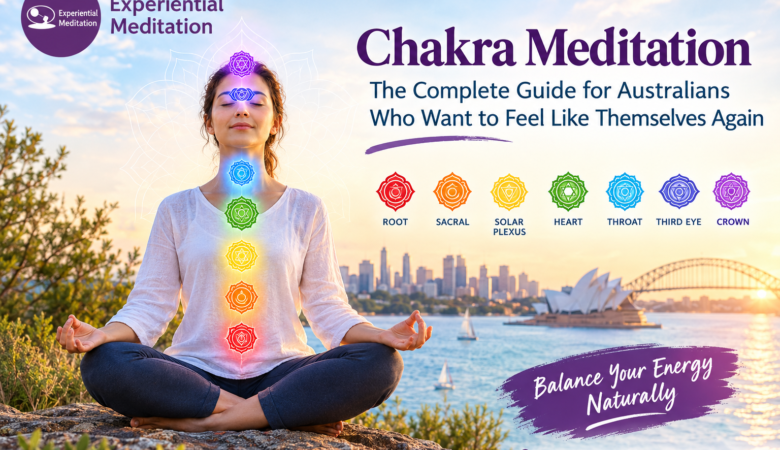
Chakra Meditation: The Complete Guide for Australians Who Want to Feel Like Themselves Again There’s a particular kind of tired that coffee can’t fix. You’ve slept eight hours, ticked off your to-do list, maybe even squeezed in a walk along the beach — and you still feel like something’s off. Foggy. Flat. A bit disconnected from your own life. If that sounds familiar, you’re not alone, and you’re definitely not broken. A lot of the people who come to us at Experiential Meditations describe exactly this feeling before they ever hear the word “chakra.” They’re not looking for a spiritual awakening. They just want to feel like themselves again. That’s actually where chakra meditation shines. It’s not about crystals on your desk or incense burning in the background (though if that’s your thing, go for it). At its core, chakra meditation is a way of checking in with different parts of your body and mind, noticing where you’re holding tension, fear, or exhaustion, and gently working through it. In this guide, we’re going to walk through what chakra meditation actually is, what the seven chakras represent in plain English, and — most importantly — how to start practising it yourself, even if you’ve got fifteen minutes and a lounge room floor. What Is Chakra Meditation, Really? The word “chakra” comes from Sanskrit and roughly translates to “wheel” or “disc.” In yogic and Ayurvedic traditions, chakras are described as spinning centres of energy that run along your spine, from the base all the way up to the crown of your head. There are seven main ones, each linked to different physical, emotional, and mental aspects of who you are. Chakra meditation is the practice of focusing your attention on these energy centres, one at a time or as a whole system, to notice where things feel blocked, sluggish, or overactive. The idea is that when your chakras are balanced, energy flows through you freely. When one gets stuck — because of stress, old wounds, or just the daily grind of modern life — it can show up as anxiety, exhaustion, irritability, or even physical tension. Now, you don’t need to buy into every metaphysical detail to get something out of this practice. Plenty of people who do chakra meditation aren’t necessarily “spiritual” in the traditional sense. They’ve simply found that spending focused time on different areas of the body and mind — using breath, visualisation, and intention — helps them feel calmer and more grounded. Think of it as a structured form of mindfulness with a body map attached. The Seven Chakras, Explained Without the Jargon Before you can meditate on your chakras, it helps to know what each one actually represents. Here’s a rundown, starting from the base of the spine and working upward. 1. Root Chakra (Muladhara) Located at the base of your spine, the root chakra is all about safety, stability, and your basic sense of being okay in the world. When this one’s balanced, you feel grounded and secure. When it’s out of whack, you might notice anxiety about money, housing, or just a general sense of unease that’s hard to pin down. 2. Sacral Chakra (Svadhisthana) Sitting just below your belly button, the sacral chakra governs creativity, pleasure, and emotional flow. A balanced sacral chakra means you can express yourself and enjoy life without guilt. When it’s blocked, you might feel emotionally numb or, on the flip side, overwhelmed by feelings you can’t quite process. 3. Solar Plexus Chakra (Manipura) This one sits around your upper stomach, roughly where you’d feel “butterflies” before a big meeting. It’s connected to confidence, personal power, and self-esteem. People with a blocked solar plexus chakra often describe feeling powerless or overly self-critical. 4. Heart Chakra (Anahata) Right in the centre of your chest, the heart chakra is about love, compassion, and connection — both to others and to yourself. When it’s open, relationships tend to feel easier and more genuine. When it’s blocked, you might notice walls going up, difficulty trusting people, or trouble with self-forgiveness. 5. Throat Chakra (Vishuddha) Located at the throat, this chakra relates to communication and speaking your truth. A balanced throat chakra means you can say what you mean without over-explaining or shrinking yourself. A blocked one often shows up as a literal tightness in the throat, or a pattern of staying quiet when you really want to speak up. 6. Third Eye Chakra (Ajna) Between your eyebrows, the third eye chakra is linked to intuition, clarity, and insight. When it’s balanced, decision-making feels easier and you trust your gut. When it’s out of balance, you might feel confused, indecisive, or stuck in overthinking loops. 7. Crown Chakra (Sahasrara) At the very top of your head, the crown chakra represents your connection to something bigger than yourself — whatever that means to you personally. It’s tied to a sense of purpose and inner peace. A blocked crown chakra can leave you feeling disconnected, cynical, or like life lacks meaning. You don’t need to memorise all of this before you start. Most people find that certain chakras “speak” to them more than others, based on what they’re currently going through. Why Australians Are Turning to Chakra Meditation We’ve noticed a real shift over the past few years. More people across Sydney, Melbourne, Brisbane, and regional towns are looking for ways to manage stress that don’t involve another app notification or another to-do list item. Life here moves fast — long commutes, a competitive job market, the constant pressure to be “on” — and traditional advice like “just relax more” doesn’t always cut it. Chakra meditation appeals to a lot of people because it gives structure to something that can otherwise feel vague. Instead of just being told to “breathe and let go,” you’re given a specific area of focus, a body-based anchor, and a sense of progress as you work through each centre. It also tends to fit naturally alongside other wellness habits Aussies already