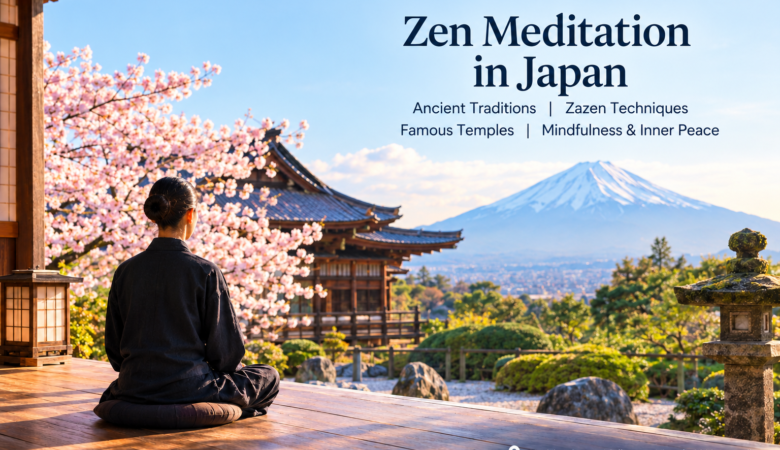
Zen Meditation in Japan: A Complete Guide
Zen Meditation in Japan: Discover the Traditional Art of Inner Peace Japan is known for its beautiful temples, peaceful gardens, traditional tea ceremonies and deep connection with mindfulness. Among its many cultural traditions, Zen meditation holds a special place. For centuries, people have turned to Zen meditation to develop self-awareness, understand their thoughts and experience a deeper sense of inner peace. Zen Meditation in Japan is more than simply sitting quietly with closed eyes. It is a traditional approach to understanding the mind, observing the present moment and developing awareness through everyday activities. Its philosophy encourages people to slow down, let go of unnecessary distractions and appreciate life as it unfolds. Whether you are interested in Japanese culture, exploring meditation for the first time or looking for ways to manage everyday stress, learning about Zen can offer a valuable perspective. From the historic temples of Kyoto to the peaceful monasteries of rural Japan, this ancient tradition continues to attract people from different backgrounds. In this guide, we will explore the history of Zen meditation, its traditional techniques, famous places to experience it and how beginners can introduce Zen principles into their everyday lives. What Is Zen Meditation? Zen meditation is a traditional form of Buddhist meditation that focuses on awareness, concentration and direct experience of the present moment. It is closely connected with Zen Buddhism, a school of Buddhism that places considerable importance on meditation and personal understanding. The Japanese word commonly associated with Zen meditation is Zazen, which translates to seated meditation. During Zazen, practitioners sit in a stable and comfortable position, maintain an attentive posture and observe their breathing and thoughts without becoming distracted by them. Unlike some meditation techniques that involve repeating a particular phrase or visualising an image, traditional Zazen generally encourages practitioners to remain present without trying to control every thought. The objective is not to force the mind to become completely empty. Instead, practitioners learn to recognise thoughts as they arise and allow them to pass naturally. Zen meditation also extends beyond the meditation cushion. It encourages mindfulness while walking, eating, working, preparing tea and interacting with others. This connection between meditation and everyday living is one of the most interesting aspects of Japanese Zen philosophy. History of Zen Meditation in Japan The history of Zen meditation in Japan is closely connected with the development of Buddhism across Asia. Buddhism originated in India before spreading to China, Korea and other parts of Asia. Zen developed from the Chinese Chan Buddhist tradition and became established in Japan during the late twelfth and thirteenth centuries. Two important figures played significant roles in introducing and developing Japanese Zen. 1. Eisai and the Development of Rinzai Zen Eisai was a Japanese Buddhist monk who travelled to China and returned with teachings associated with Rinzai Zen. His teachings helped establish Zen as an important Buddhist tradition in Japan. Rinzai Zen became particularly influential among sections of the Japanese warrior class and later developed a strong presence in Japanese culture. One of its distinctive features is the use of Koans. These are questions, statements or stories designed to encourage practitioners to move beyond ordinary logical thinking and develop deeper understanding. 2. Dogen and the Development of Soto Zen Another important figure was Dogen, who introduced and developed the Soto Zen tradition in Japan. Dogen placed particular importance on a meditation approach known as Shikantaza, often translated as just sitting. Rather than concentrating on finding an answer to a particular question, practitioners simply sit with awareness and openness. His teachings continue to influence Soto Zen communities and meditation traditions today. These historical developments helped establish Zen meditation as an important part of Japanese Buddhist life. Its influence can also be seen in Japanese gardens, calligraphy, traditional arts and everyday cultural practices. Different Types of Zen Meditation in Japan Japanese Zen Buddhism includes different schools and approaches. Although they share important principles, their meditation methods and teaching traditions can vary. 1. Zazen Meditation Zazen is the best-known form of Japanese Zen meditation. It involves sitting quietly while maintaining an upright posture and developing awareness of the present moment. Practitioners generally use a meditation cushion called a Zafu. Depending on their flexibility and experience, they may sit in a full-lotus, half-lotus or comfortable cross-legged position. The eyes are usually kept slightly open, and attention is directed towards posture, breathing and awareness. Zazen is not about achieving a particular experience. It is about developing a steady relationship with the present moment. 2. Shikantaza Meditation Shikantaza is closely associated with the Soto Zen school. It is commonly described as just sitting. Practitioners do not focus on repeating a mantra, solving a Koan or controlling their thoughts. Instead, they maintain an alert and relaxed awareness while allowing experiences to arise naturally. This approach can be challenging for beginners because there is no particular object to concentrate on. However, regular guidance and consistent practice can help people become more comfortable with it. 3. Koan Meditation Koan meditation is particularly associated with Rinzai Zen. A Koan is a traditional question, statement or story that cannot always be understood through ordinary reasoning. One famous example asks whether a dog has Buddha-nature. Under the guidance of an experienced Zen teacher, practitioners contemplate these questions as part of their spiritual training. Koan study is not simply an intellectual exercise. It forms part of a structured tradition of meditation and personal investigation. 4. Kinhin (Walking Meditation) Zen meditation is not limited to sitting Kinhin is a traditional form of slow walking meditation often practised between periods of Zazen. Practitioners walk slowly while maintaining awareness of their posture, breathing and movements. It provides an opportunity to continue meditation while moving and helps demonstrate that mindfulness does not need to stop when a sitting session ends. How to Practise Zen Meditation: A Beginner’s Guide You do not need to travel to Japan or join a monastery to begin learning Zen meditation. Many of its basic principles can be explored at home with patience